Spectroelectrochemistry
Spectroelectrochemistry is a technique that synchronizes electrochemical and spectroscopic measurements in real time, providing deeper insights into electron transfer processes, complex redox reactions, reaction kinetics, thermodynamics, and the characterization of reaction intermediates and products — all within a single experiment.
By hyphenating electrochemistry with a wide range of spectroscopic techniques such as UV-VIS, Raman, FT-IR, XRD and others, spectroelectrochemistry enables in situ and time-resolved analysis for advanced material characterization, catalysis studies, energy storage research, and more.
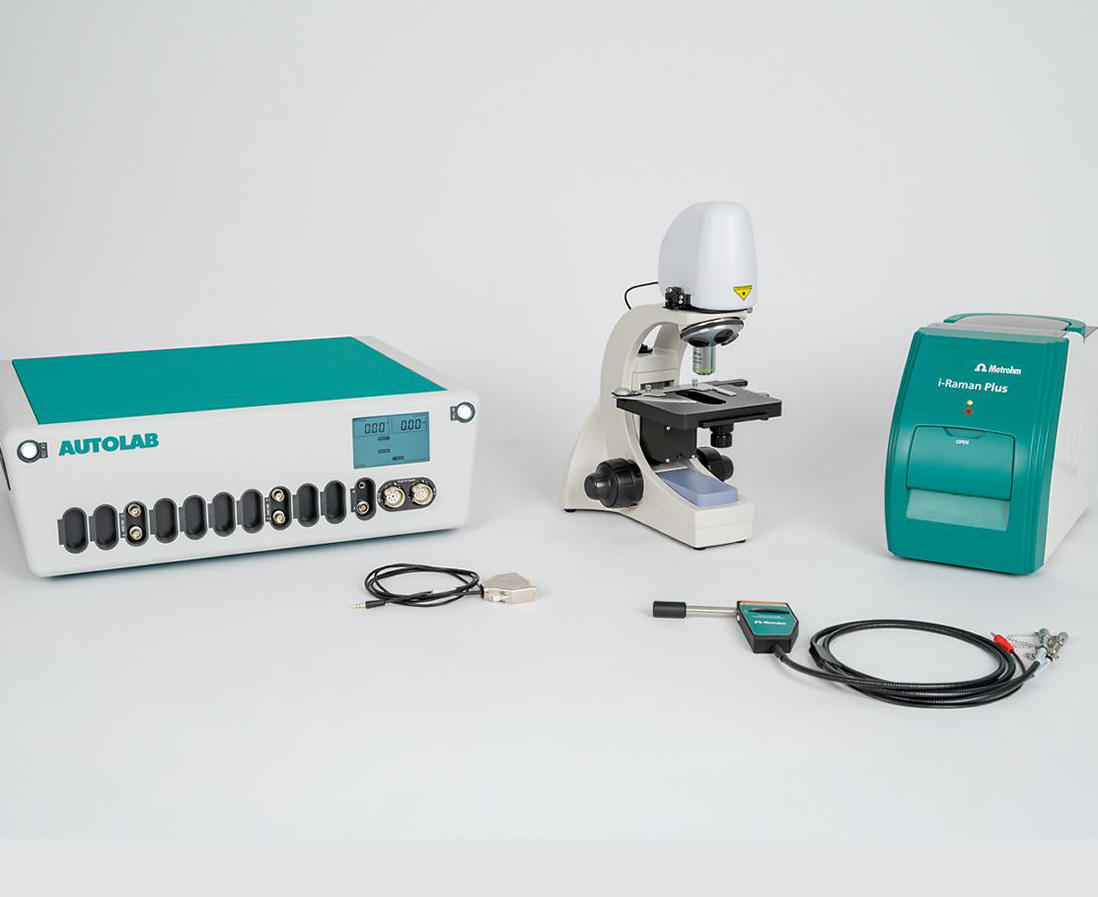
Hyphenated Metrohm EC-Raman solutions
Raman spectroelectrochemistry - Synchronized, independent Metrohm Autolab potentiostats/galvanostats hyphenated with Metrohm bench-top Raman instruments, tailored to your application requirements.
Explore our devices
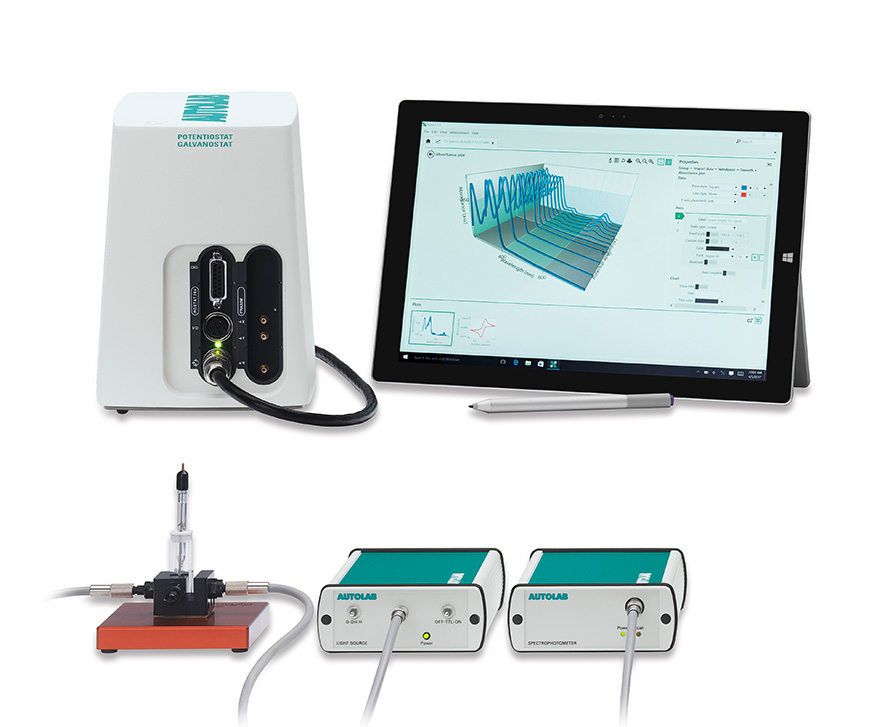
Hyphenated Autolab UV-VIS-NIR solutions
UV-Vis spectroelectrochemistry with a NOVA-integrated Metrohm Autolab setup—independent electrochemical and spectroscopy systems, fully synchronized and compatible with your preferred potentiostat or galvanostat.
Explore our devices
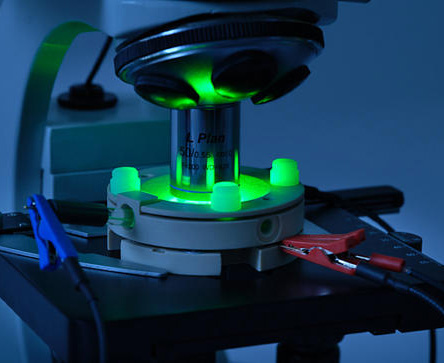
Hyphenated Autolab potentiostats with other spectrometers
Third-party spectroscopy systems hyphenated and synchronized with the Metrohm Autolab potentiostat and galvanostat which best fits your application requirements.
Explore our devices
Choosing and configuring your spectroelectrochemical setup
The suitable spectroelectrochemical equipment and accessories are essential tools for driving your next discovery in your area of research. Defining your application-specific requirements is crucial for obtaining accurate, reliable, and complete experimental data. Below are the five key criteria to consider when configuring a high-performance spectroelectrochemistry system:
Criteria 1: Potentiostat/Galvanostat Performance
Choose the potentiostat based on the application requirements, flexibility for future needs and versatility:
- What is the maximum compliance voltage required?
- What are the minimum and maximum current ranges to be applied or measured?
- Will you need to perform Electrochemical Impedance Spectroscopy (EIS)?
- Do you need true analog scan for studying interfacial processes?
- Does your application require a bipotentiostat?
Criteria 3: Versatility of the spectroelectrochemical setup
Choose between an “open” hyphenated electrochemical system or “all in one box” setup.
The main advantage of the “open” system with synchronized electrochemistry and optical measurements by using external triggering are:
- Two independent instruments for electrochemistry and spectroscopy useable as hyphenated or stand-alone solutions
- Possibility to choose the potentiostat with the highest specifications
- Optional features are available for your electrochemical experiment such as: EIS, true analog scan, bipotentiostat, and many others
- Possibility to choose an optical instrument with the highest specifications
- Availability and compatibility with a wide range of accessories for both electrochemical and spectroscopic measurements
Autolab - UV-VIS systems Autolab - Raman systems
Criteria 2: Spectroscopic Techniques in Spectroelectrochemistry
Depending on the spectral region, each of them—when coupled with electrochemistry—provides unique insights based on the type of information you seek:
- UV-VIS: offers real-time insight into the electronic transitions, redox states, and molecular energy levels. Useful for studying reaction mechanisms, and kinetic/thermodynamic behavior.
- Raman: provides specific information related to the structural changes, molecular composition, and orientation of species involved in the electrochemical reaction
- FT-IR: delivers real-time, molecular-level insights into the changes in chemical species occurring at the electrode–electrolyte interface and within the electrolyte during an electrochemical reaction
- In-situ XRD (X-ray diffraction): Detects structural and phase changes at atomic level which occur in the material during the electrochemical reaction.
- Other spectroscopic methods can also be hyphenated with Metrohm Autolab potentiostats, with synchronization handled via TTL triggering.
Criteria 4: Leverage Existing Lab Resources
- Already have the spectrometer in your lab? Evaluate the possibility to hyphenated it with a Metrohm Autolab potentiostat/galvanostat to perform simultaneous electrochemical and optical measurements.
- Already have a Metrohm Autolab potentiostat/galvanostat? Consider hyphenating it with the needed spectrometer and measure synchronized electrochemical and optical data
- Already familiar with the powerful NOVA and/or INTELLO software? Use your knowledge and keep using them for the synchronized spectroelectrochemical measurements.
Criteria 5: Post-purchase support and service
The quality and availability of post-purchase technical support and service are crucial. With our global presence in over 120 countries through Metrohm subsidiaries, our dedicated distribution and service or application support teams will answer your questions within 48 hours
We also offer an industry-leading warranty and support for all instruments, modules and accessories.
Contact
FAQ - Spectroelectrochemistry
Spectroelectrochemistry is a powerful technique that combines electrochemical and spectroscopic measurements. It is used to study chemical processes—particularly redox reactions—in real time and in situ, providing a more comprehensive understanding of a system than either electrochemistry or spectroscopy alone. Electrochemical measurements offer insights into electron transfer, kinetics, and thermodynamics, while the spectroscopic measurements can bring complementary information on the molecular and structural details of the reactants, intermediates and interfaces.
Learn more about our spectroelectrochemistry solutions.
We offer an industry-leading 3-year warranty for all our instruments, along with local support available in over 120 countries worldwide. This ensures a rapid response for sales and service, usually within 48 hours.

